

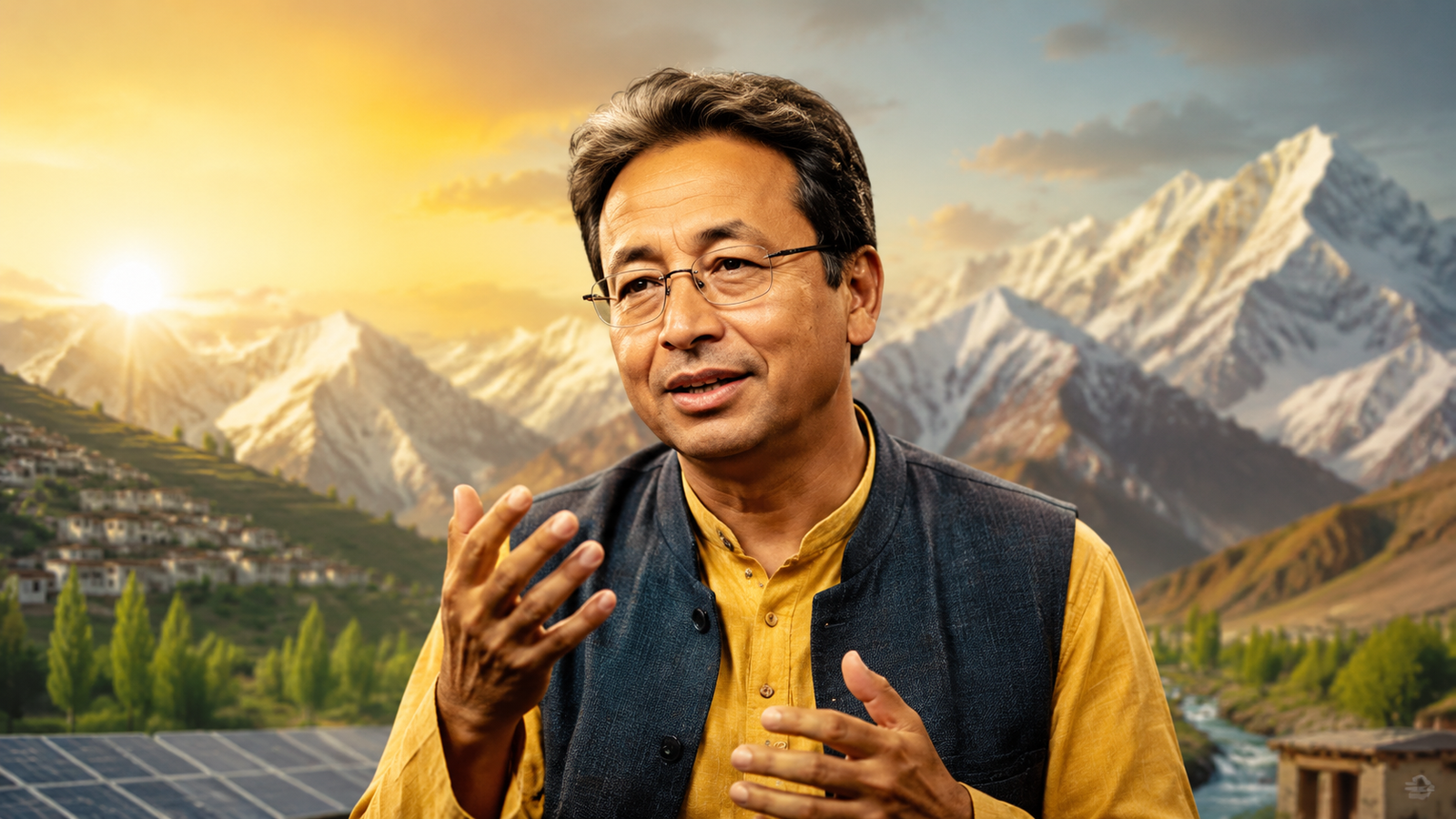
Sonam Wangchuk is a name that resonates with innovation, education reform, environmental sustainability, and social activism. His contributions to the society, especially in the Himalayan region of Ladakh, have transformed lives and impacted entire communities. Wangchuk’s work in education, technology, and grassroots movements reflects his dedication to solving complex socio-economic challenges, with an emphasis on cultural preservation and environmental sustainability. This article explores Sonam Wangchuk’s multifaceted contributions to social causes and their significance in shaping a more inclusive and resilient society.
Early Life and Background
Sonam Wangchuk hails from Ladakh, a remote and rugged region in northern India that faces unique challenges due to its harsh terrain, extreme weather conditions, and geographic isolation. Growing up in this challenging environment, Wangchuk developed a deep understanding of the region’s difficulties and a strong sense of responsibility to contribute toward its development. His academic journey in engineering and later his work in social causes were driven by his commitment to finding solutions to the problems faced by his people.
Wangchuk’s early experiences in Ladakh instilled in him the importance of sustainable practices, cultural preservation, and education tailored to local needs. This foundation set the stage for his later work, where he combined technical knowledge with a profound understanding of his community’s values and needs.
Quick Bio
| Name | Sonam Wangchuk |
|---|---|
| Born | 1959, Ladakh, India |
| Profession | Engineer, Educator, Innovator, Environmentalist, Activist |
| Famous For | SECMOL, Ice Stupa, HIAL, Advocacy for Ladakh’s Autonomy |
| Awards | Ramon Magsaysay Award (2018), Rolex Award for Enterprise (2016) |
Revolutionizing Education with SECMOL
One of the most significant contributions of Sonam Wangchuk has been in the field of education. He founded the Students’ Educational and Cultural Movement of Ladakh (SECMOL), a grassroots organization that seeks to revolutionize the education system in the region. The traditional education system in Ladakh, like many remote regions, was not tailored to the needs of the students, often leading to high dropout rates and disengagement. Wangchuk’s initiative aimed to change that.
SECMOL’s approach to education is unique in that it combines formal education with cultural relevance. The program emphasizes experiential learning, local knowledge, and practical skills, all while preserving Ladakhi heritage. The school provides an alternative to the mainstream educational system, where students who fail in traditional exams are offered a second chance to continue their education. By focusing on community and personal development, SECMOL has transformed the lives of many students, offering them the tools to thrive in their environment and beyond.
Ice Stupa Project: A Solution to Water Crisis
Wangchuk is also widely recognized for his Ice Stupa project, which offers a solution to the water scarcity faced by farmers in Ladakh. The region experiences extreme winters with long periods of freezing temperatures, making water sources inaccessible during crucial agricultural seasons. Wangchuk’s innovative solution involves the creation of artificial glaciers, called Ice Stupas, that store water during the winter and slowly release it as the ice melts in the spring.
The Ice Stupa is an engineering marvel, designed to combat the challenges of water storage and irrigation in a region with limited natural water resources. This project not only supports local agriculture but also showcases the potential of combining traditional knowledge with modern engineering to address pressing environmental issues. Wangchuk’s initiative has received global attention for its simplicity and effectiveness, and it is an example of how innovation can lead to sustainable solutions for climate adaptation.
HIAL: Himalayan Institute of Alternatives
In addition to his work with SECMOL and the Ice Stupa, Wangchuk founded the Himalayan Institute of Alternatives Ladakh (HIAL), an institute that offers higher education designed specifically for the needs of mountain communities. The goal of HIAL is to provide students with the skills and knowledge to address the unique challenges faced by Himalayan regions, including issues related to climate change, sustainability, and local resource management.
HIAL’s approach is interdisciplinary, integrating traditional knowledge with modern science to create solutions for local problems. The curriculum emphasizes hands-on learning and problem-solving, preparing students to take on leadership roles in their communities. Through HIAL, Wangchuk has created a platform for young minds to develop innovative solutions to regional challenges, all while fostering a sense of pride in their heritage and culture.
Political and Social Advocacy
Apart from his contributions in education and technology, Wangchuk has also been an outspoken advocate for the rights of the people of Ladakh. He has been actively involved in movements that seek greater autonomy for the region and stronger safeguards for its environment and cultural heritage. Wangchuk has advocated for the inclusion of Ladakh under the Sixth Schedule of the Indian Constitution, which would grant the region special autonomy and protections.
His advocacy for Ladakh has been marked by both peaceful protests and engagement with the government. Wangchuk has used his platform to raise awareness about the challenges faced by the region, including threats to its environment, water resources, and cultural integrity. His commitment to these causes reflects his dedication to ensuring that the people of Ladakh can preserve their way of life while benefiting from the development and opportunities offered by the modern world.
Recognition and Global Influence
Wangchuk’s work has been internationally recognized, earning him numerous awards and accolades. In 2018, he was honored with the Ramon Magsaysay Award, often referred to as the “Asian Nobel Prize,” for his innovative work in education and community development. He has also been featured in several global media outlets, and his story has inspired many, especially in the areas of education reform and environmental innovation.
Wangchuk’s influence extends beyond Ladakh and India; his work has become a global example of how innovation and community-driven solutions can address complex socio-environmental issues. His story has inspired countless individuals and organizations worldwide to take a more holistic and sustainable approach to development.
Conclusion
Sonam Wangchuk’s contributions to social causes have made a lasting impact, particularly in the Himalayan region of Ladakh. His work in education, environmental sustainability, and social advocacy has transformed lives and brought attention to the unique challenges faced by mountain communities. Wangchuk’s ability to combine traditional knowledge with modern science and technology has led to groundbreaking solutions that address both local and global issues. As an educator, innovator, and activist, Wangchuk continues to inspire change and offer hope for a more sustainable and inclusive future.
FAQs
What is the SECMOL initiative by Sonam Wangchuk?
The Students’ Educational and Cultural Movement of Ladakh (SECMOL) is an organization founded by Sonam Wangchuk that aims to revolutionize the education system in Ladakh. It focuses on making education more relevant to local culture and context while emphasizing experiential learning and community development.
What is the Ice Stupa project and how does it help the community?
The Ice Stupa project is an innovation by Wangchuk that creates artificial glaciers to store water during winter. This stored water is then released in the spring to help irrigate crops in Ladakh, a region that faces severe water scarcity during the growing season.
What is the Himalayan Institute of Alternatives (HIAL)?
The Himalayan Institute of Alternatives Ladakh (HIAL) is an institution founded by Wangchuk to offer higher education tailored to the needs of Himalayan communities. It combines traditional knowledge with modern science and provides hands-on, interdisciplinary learning to address regional challenges.
How has Sonam Wangchuk contributed to the political cause of Ladakh?
Sonam Wangchuk has advocated for greater autonomy for Ladakh, including the region’s inclusion under the Sixth Schedule of the Indian Constitution, to protect its cultural heritage, environment, and natural resources.
5. What global recognition has Sonam Wangchuk received for his work?
Wangchuk has been internationally recognized for his contributions, including receiving the Ramon Magsaysay Award in 2018 for his work in education reform and community development. His innovations, particularly in water conservation and education, have garnered global attention.