

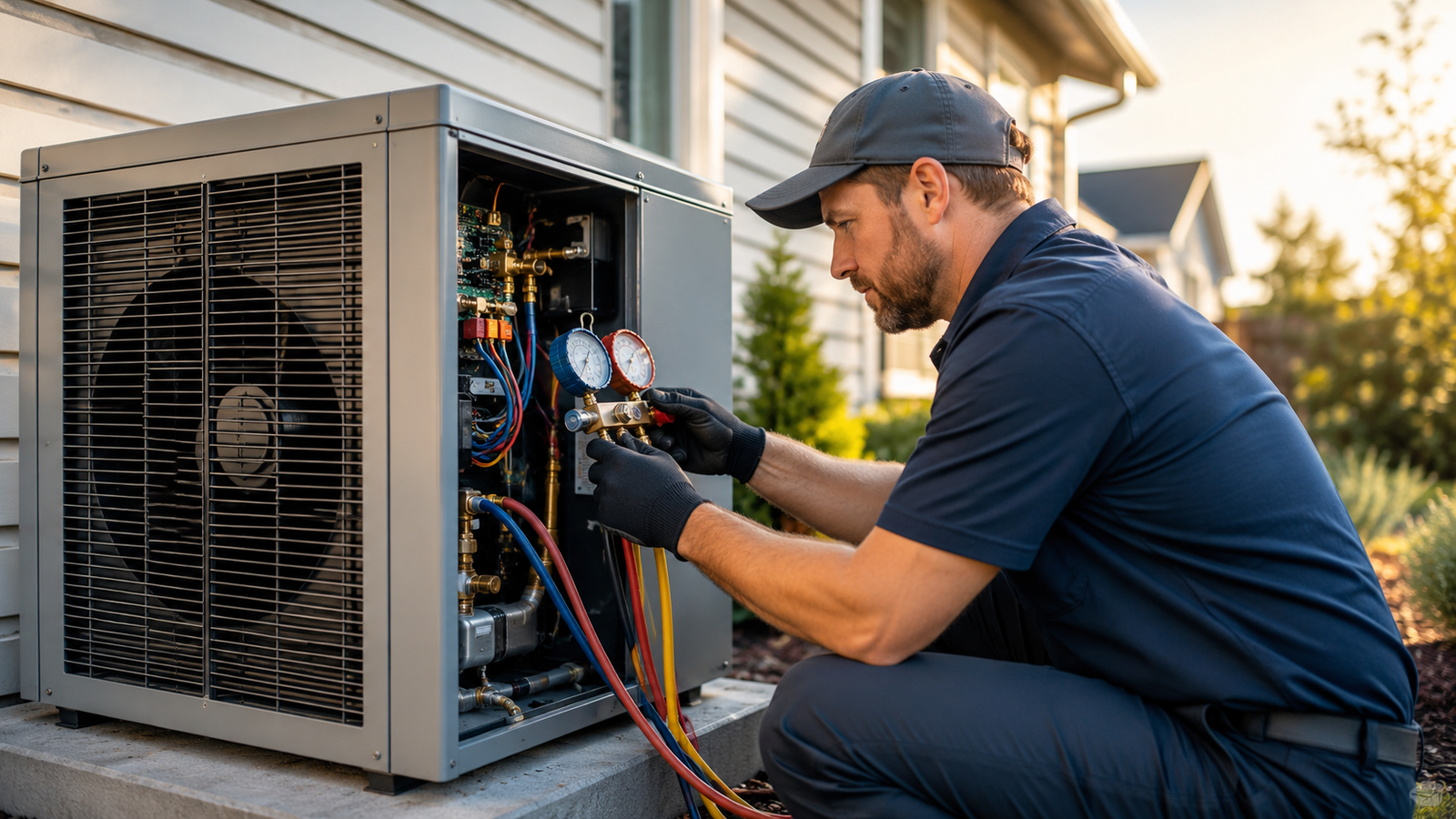
Heat pumps differ from furnaces and standard air conditioners in that they move heat in both directions. In cooling mode, they remove indoor heat. In heating mode, they draw heat from the outdoor air and move it indoors. Because the same equipment handles both seasons, small setup problems can affect comfort for much of the year. An HVAC contractor is needed to check sizing, airflow, refrigerant charge, controls, and defrost operation. When these areas are handled correctly, a heat pump can run smoothly, use less energy, and keep rooms comfortable without frequent thermostat changes or repeated service calls over many seasons.
Performance Needs Careful Setup
- Sizing Must Match the Home
A heat pump must be sized around the home’s actual heating and cooling load, not only square footage. An oversized unit may reach the thermostat setting too quickly, shut off before air mixes through the rooms, and leave humidity or temperature swings behind. An undersized unit may run constantly during hot afternoons or cold mornings, increasing energy use while still failing to meet the home’s needs. An HVAC contractor can review insulation, window exposure, ceiling height, duct layout, room additions, and local weather demands before recommending equipment. This matters because a heat pump has to perform in both heating and cooling modes so a poor match can cause year-round frustration. Homeowners seeking related home comfort support may visit https://www.semperfiheatingcooling.com/tucson-plumbers/ to consider how connected systems affect daily comfort. Correct sizing helps the heat pump cycle longer, move air more evenly, and avoid unnecessary strain on major components during demanding conditions and changing weather.
- Airflow Controls Heat Pump Output
Heat pumps depend on steady airflow across the indoor coil. If airflow is weak, blocked, or poorly balanced, the system may lose capacity even when the outdoor unit is working. Dirty filters, restricted returns, undersized ducts, closed vents, damaged blower parts, or clogged coils can all reduce performance. An HVAC contractor can measure airflow, inspect ducts, clean affected components, and adjust blower settings to ensure the heat pump transfers heat properly. This is important because poor airflow can cause frozen coils in cooling mode, high pressure readings, short cycling, or uncomfortable rooms in heating mode. The homeowner may think the heat pump is failing when the real issue is air delivery. Good airflow also helps the system run quieter because the blower is not fighting unnecessary resistance. When air moves properly through the equipment and ductwork, rooms experience steadier comfort, and the heat pump can operate closer to its intended capacity over long cycles.
- Refrigerant Charge Must Be Accurate
A heat pump cannot move heat properly if the refrigerant level is wrong. Too little refrigerant may reduce heating and cooling output, cause ice buildup, stress the compressor, and lead to longer run times. Too much refrigerant can also harm performance by raising pressures and causing the system to work harder than necessary. An HVAC contractor uses proper testing methods to check the refrigerant charge, temperature split, pressure readings, coil condition, and signs of possible leaks. This step matters because refrigerant is not a fuel that is consumed during normal operation. If the charge is low, there may be a leak that needs to be found and repaired before the system is simply topped off. Accurate refrigerant charge allows the heat pump to absorb and release heat as designed. Without that balance, the unit may run longer, cost more to operate, and wear out parts sooner than expected. This also protects comfort during sudden temperature swings and extended seasonal use.
- Controls and Defrost Need Correct Operation
Heat pumps rely on controls that decide when to heat, cool, run the fan, reverse refrigerant flow, and activate defrost. If thermostat settings, sensors, reversing valves, relays, or control boards are not working correctly, the system may blow cool air during heating, switch modes poorly, or run backup heat too often. An HVAC contractor can test these controls and confirm that the thermostat matches the heat pump type. The defrost operation is also important because outdoor coils can accumulate frost during heating. A working defrost cycle clears the coil, allowing the system to continue transferring heat. If defrost fails, ice can build up and reduce output. If defrost runs too often, energy use can rise, and comfort can suffer. Proper control setup keeps the system from wasting energy, protects the outdoor unit, and helps the heat pump respond correctly as outdoor temperatures change through daily use.
Maintenance Keeps Performance Stable
An HVAC contractor is needed to ensure proper heat pump performance because the system depends on many interconnected parts working in balance. Correct sizing, strong airflow, accurate refrigerant charge, and reliable controls all shape how well the unit heats and cools. If one area is ignored, the heat pump may run longer, use more energy, or leave rooms uncomfortable. Regular inspection also helps catch small problems before they damage major components. A heat pump should provide steady comfort through changing seasons, not constant worry. With careful setup and service, the system can deliver dependable performance and support a more comfortable home.